Maya's Red Paint Clue

Ravish Kumar
| 17-11-2026
 · Astronomy Team
The ancient Maya were known for their colourful architecture, decorated pottery and carefully crafted artwork. Red was particularly prominent in their visual culture, appearing on buildings, monuments and many other objects.
However, a new scientific investigation has revealed an unexpected consequence of this widespread use: mercury from red pigments accumulated in nearby lakes, leaving behind evidence of serious environmental contamination.
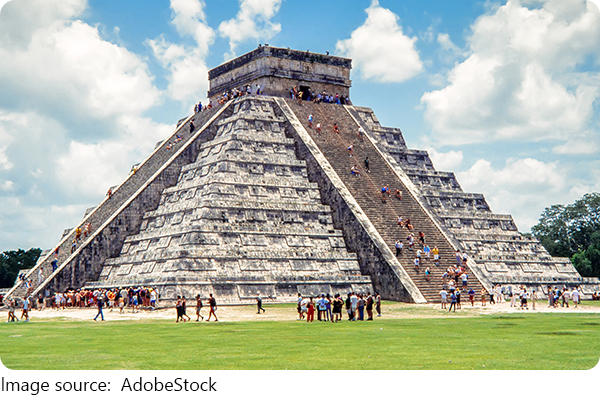
Researchers studying sediment from two locations in Mexico's Yucatán Peninsula discovered unusually high mercury concentrations dating back to the period when Maya communities occupied the region. Their findings suggest that the materials used to produce striking red decorations may have affected local water quality for centuries.
The Mineral Behind the Red Colour
One important source of the Maya's red pigment was cinnabar, a naturally occurring mineral made from mercury and sulfur. When processed into a fine pigment known as vermilion, it produced a vivid red colour suitable for decorative painting.
The Maya used red extensively. Archaeological discoveries have identified the pigment on sculptures, monuments, walls, plazas and pottery. Another material, red ochre, also provided colour, but it was made from an iron-based mineral rather than mercury-rich cinnabar.
The two materials had an important difference: cinnabar contained mercury, a chemical element that can become highly toxic under certain environmental conditions. Although its colour made it valuable for artistic work, its widespread application created a potential source of contamination.
What the Lake Sediments Revealed
To investigate the extent of the contamination, researchers examined sediment cores collected from two locations: Cobá Lake, near the ancient Maya city of Cobá, and Cenote Xcach, close to a less-studied archaeological site. Sediment cores are long samples taken from the bottom of lakes. Their layers preserve information about environmental conditions over long periods, allowing scientists to reconstruct changes that occurred centuries or even thousands of years ago.
The team examined the samples for mercury concentrations and found evidence of significant contamination during several periods of Maya occupation. At Cobá Lake, elevated levels appeared from approximately A.D. 40 to 300. At Cenote Xcach, contamination occurred during multiple intervals, including a prolonged period between approximately A.D. 535 and 820.
Some samples contained as much as 2.3 parts per million of mercury. This was an exceptionally high concentration, indicating that the contamination was not simply a minor trace left by occasional decorative activities. The findings, published in the journal Science Advances on November 4, 2026, expanded scientific understanding of mercury pollution in the ancient Maya region.
Evidence of Damage to Aquatic Ecosystems
Mercury contamination can have serious consequences once it enters freshwater environments. Under certain conditions, microorganisms living in lake sediments can transform mercury into methylmercury, a particularly harmful form that can accumulate through aquatic food webs.
The researchers therefore examined more than the chemical composition of the sediment. They also looked for biological indicators that could reveal how the lakes had responded to the pollution. Their analysis identified substantial declines in several types of microscopic organisms and other small aquatic life during periods when mercury concentrations were elevated. Evidence of algae, bacteria, cyanobacteria and tiny shelled organisms became scarce in affected sediment layers.
How Did the Mercury Reach the Lakes?
Researchers believe that runoff from areas where cinnabar-based pigments were prepared or applied may have carried mercury into nearby waterways. Over time, repeated use of the material could have allowed contamination to build up in the surrounding environment.
Another important detail concerns the mineral's origin. Cinnabar does not naturally occur in the Yucatán Peninsula, according to the researchers. This suggests that the material was probably transported into the region from elsewhere. If confirmed, this would provide further insight into how valuable materials moved between Maya communities.
A Long-Term Environmental Lesson
The research does not establish that mercury pollution alone caused major changes in Maya society. Environmental conditions in the region were influenced by several factors, including periods of drought, changes in land use and declining water quality. Instead, the study identifies mercury contamination as another environmental pressure that deserves attention.
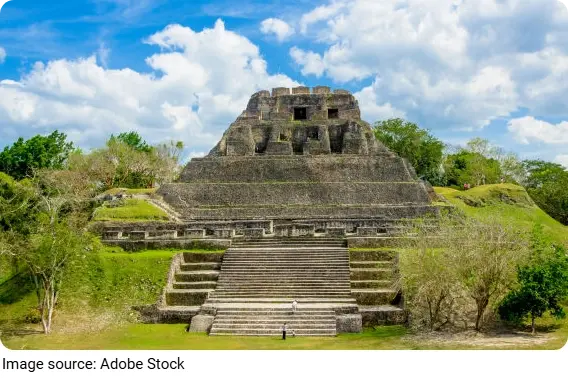
By examining ancient lake sediments, researchers have connected a familiar feature of Maya artwork with long-lasting changes in freshwater ecosystems. The findings demonstrate how everyday materials used in decoration can have consequences far beyond their original purpose.